Showing posts with label sprouting. Show all posts

Tuesday, June 20, 2017

Why Grow Your Own Sprouts? (Guest Post)


It is very rarely that I ever have anyone else add outside content to my blog. In fact, this might be one of the first in the last several years.  That being said, a great gal named Gemma Hodgson contacted me a few days ago with some great thoughts on why anyone should grow their own sprouts.  She talked about my Alfalfa Sprout Tutorial from several years ago, and I had to agree that sprouting is a remarkable skill to have. This goes along with what we've learned recently here on the The Power of Indoor Micro-green Farming . I love sprouting! It has been a great boost to my own health! So, I'm adding Gemma's article here to the blog. Thank you so much for sharing this with all of us Gemma!

Why Grow Your Own Sprouts
by Gemma Hodgson

Why Grow Your Own Sprouts?
In a previous blog entry, Chef Tess Bakeresse showed readers how to grow alfalfa sprouts, one of the easiest and most popular sprouts to grow. Of course, many other sprouts can be grown at home, including chickpeas, lentils, buckwheat, mung beans, unshelled sesame seeds, adzuki and so much more. Sprouting can be achieved quickly (sometimes in as little as three days) and cheaply (you can cut down quite a bit off your grocery bill by making your own sprouts for sandwiches, soups, stews and salads). However, one thing that is quite surprising, is the wide range of benefits we can received from eating foods in sprouted form.
Sprouts have actually been used to enhance healing for thousands of years in China, though it wasn’t until World War II that they became more prevalent in the United States. At this time, protein sources were hard to come by and the scientific community advised the government that the consumption of germinated sprouts was the cheapest and best alternative to meat protein.
  • Sprouts are easier to digest
Many people complain that after eating mung beans, chickpeas or lentils, they can have digestive trouble, including a bloated sensation, or a heavy, uncomfortable feeling. This is because these foods, when unsprouted, contain high levels of enzyme inhibitors, which stop our body from absorbing important minerals. Growing our sprouts at home is not only a good idea from an economic standpoint; it is also a good way to eat healthily yet still feel light and energetic.
  • Sprouts contain more vitamins
The Vitamin B and C content of foods such as mung beans, chickpeas and lentils rises dramatically when we sprout them. Sprouting neutralizes enzyme inhibitors and enhances the functioning of the body’s own enzymes. Sprouts are also rich in proteins and minerals.
As noted in the book Microgreens: Novel, Fresh and Functional Food to Explore All the Value of Biodiversity, “Although often used with the main aesthetic objective for cymbal decoration, microgreens also have an excellent nutritional profile and ... are considered ‘functional foods’ or ‘superfoods’, as they can also provide bioactive compounds capable of improving some functions of the body and/or reduce the risk of disease.”
  • Sprouts can play a role in disease prevention
Sprouts are an almost perfect food. They are rich in antioxidants, which fight free radicals. Oxidation gives rise to abnormal cells which proliferate and contribute to the development of age-related diseases. Sprouts can therefore play an important role in a lifestyle which looks to prevent a host of conditions, including immunity-related conditions and cancer. Sprouts are rich in flavonoids, which help kill off cancer cells. Researchers have concluded that since different flavonoids are present in different foods, knowledge about the different types of flavonoids can be purposely applied to prevent cancer and as a complementary part of cancer treatment.
  • Sprouts promote heart and kidney health
When a person has heart or kidney problems, their electrolyte counts tend to be abnormal. Those with kidney disease normally have low electrolyte counts, since they tend to retain fluid. Sprouts also promote heart health, since they are low on the glycemic index and can form part of a healthy diet aimed at keeping blood sugar levels table.
  • Sprouts are an excellent detox food
If you regularly detox or you are seeking to rid your body of harmful toxins (even if you are undergoing rehabilitation for either substance abuse or alcohol addiction), sprouts are an excellent item for conclusion in your nutritionally program. They are nutritious, yet contain very few calories often, negligible amounts of fat. At times when body and mind are facing a difficult challenge, optimal nutrition is vital. Research has shown that organically grown foods are higher in antioxidants than conventionally grown produce; moreover, they are free of toxins and heavy metals, which can be present in non-organic foods. Sprouts are a 100 per cent organic food you can grow in between three to five days at home – it just doesn’t get any better than that!
Clive McCay, Professor of Nutrition at Cornell University, hits the nail on the head when he calls sprouts “A vegetable which will grow in any climate, will rival meat in nutritive value, will mature in three to five days, may be planted any day of the year, will require neither soil nor sunshine, will rival tomatoes in vitamin C, and will be free of waste in preparation…” The Internet is filled with fantastic tips for growing sprouts – don’t leave it for another day, start growing your own sprouts today.

Thank you again Gemma for all this great stuff! You rock!


Always My Very Best,
Your Friend Chef Tess


Saturday, June 17, 2017

Pistachio Peach Sprouted Einkorn Artisan Bread


  The concept of sprouted wheat bread isn't new to me, in fact I used it for years to make my Sprouted Wheat Bread in a Food Processor that first saw its way onto the blog in 2009. I have many Sprouted Wheat Recipes but those have been tricky because of the nature of sprouted wheat and the process can be time consuming.  In the early days, I had a lot more time to sprout the grain and make my own products directly, including the option of re-dehydrating the sprouted grains and making them into flour.  If you have the time and means to do it, that is a valuable skill and the most nutritious. When grains are sprouted they are converted into a raw, living food with more vital nutrients which are more readily absorbed by the body. Sprouted flours are digested by the body as a vegetable not as a starch.
When grains are sprouted, enzymes are created that aid digestion. Complex sugars are also broken down and as a result, painful intestinal gases and potent carcinogens and enzyme inhibitors are neutralized. This is especially beneficial for those people with intolerance to wheat as they often discover that they can digest sprouted grains without any problem. Grains are normally digested as starches using pancreatic enzymes but when grains are sprouted the starch molecules are changed into vegetable sugars which the body then digests as a vegetable.  

The trick is getting the dehydration done at just the right enzyme stage of the sprouting as to produce good bread instead of bricks. It is also an issue to use a dehydration method that doesn't get too hot and kill all the nutritional benefits of sprouting (anything over 118 degrees). Those enzymes are critical to the raising process of the bread.   
I personally have changed to just purchasing the Pre-sprouted and dehydrated organic sprouted wheat and milling it at home in a stone mill or if you don't have a mill, purchasing it already ground. The other baking benefit of sprouted flour is that it has the depth of flavor associated with a long slow fermentation in a bread dough that is usually achieved with eight-12 hours of slow raising, but it can be done in a short period of time (usually an hour or less). 
Because Einkorn is an ancient form of wheat, it is already a better option for those who can't tolerate modern wheat, but sprouting the grain takes it one step further!   Organicgrains.com is the only company I know of that actually mills the grains to order to provide the freshest flours possible and retaining the nutrition of the flour. I'm addicted to their  Sprouted Einkorn Wheat Flour .  It has all the benefits of sprouted grain without having to do all the back-work.  I'm okay with that right now.  I've enjoyed working with OrganicGrains.com and their products so much, that I asked if they would sponsor my TV show. They graciously agreed and have been very kind to us. So yes, I do benefit greatly from my association with their brand, but I loved them long before they started backing me. 
Sprouted Einkorn Flour from OrganicGrains.com 

Why Use Sprouted Wheat Flour?
According to research done by the University of Minnesota, sprouting increases the total nutrient density.
  • Vitamin B1 (thiamin) increase of 28%
  • Vitamin B2 (riboflavin) increase of 315%
  • Vitamin B3 (niacin) increase of 66%
  • Vitamin B5 (pantothenic) increase of 65%
  • Biotin increase of 111%
  • Folic Acid increase of 278%
  • Vitamin C increase of 300%
These studies also demonstrated a significant increase in various enzymes including amylase, lipase and Protease. Sprouting grains also helps with the absorption of calcium, magnesium, iron, copper and zinc as reported by the Price-Pottenger Nutrition Foundation.*Resource: www.organicwheatproducts.com 
 Gourmet Nuts and Dried Fruit sent me this huge box of my favorite little nuggets of love and asked me to try them out in my baking. We discussed earlier this week all The Health Benefits of Pistachios so I wanted to use them in conjunction with this amazing sprouted wheat flour to really get all that nutrition in one place. 


This is "Staff of Life" kind of bread. It will definitely give you a huge boost of energy as well as a full gamut of benefits.  If you don't want to use dried peaches, this recipe will work with any dried fruit. Figs would be amazing! 


Pistachio Peach Sprouted Einkorn Artisan Bread
Yield: 1 loaf

3 cups Sprouted Einkorn Wheat Flour
1 tsp Salt 
1 1/2 cups Water, lukewarm
1 cup Raw Pistachios, chopped 
1/2 cup Dried Peaches or any Dried Fruit, chopped
1/2 cup Coconut Sugar
1 1/2 tsp Yeast, active dry

 Directions: Combine all ingredients in a large 1 gallon bowl, and mix by hand until combined, about 2 minutes.


Cover tightly with plastic wrap or a lid and allow to sit at room temperature 1 hour.  Turn the dough out onto a lightly floured countertop.  Cut it in half and form each part gently into a ball. Roll dough into a rectangle and fold into thirds. Roll, pinch, and form into a loaf. Place in greased 4 quart dutch oven loaf and raise one hour. Preheat oven to 425°. When oven is hot and only then, place loaves in the oven. Covered with lid. After 15 minutes, reduce heat to 325 ° and remove lid, Continue baking for 30-35 minutes, until internal temperature is over 175°.


There you go! Make some nutritious and extremely delicious bread. Your body will thank you!


Always My Very Best,
Your Friend Chef Tess


Tuesday, May 23, 2017

The Power of Indoor Micro-Green Farming

Photo Courtesy of IOGP website

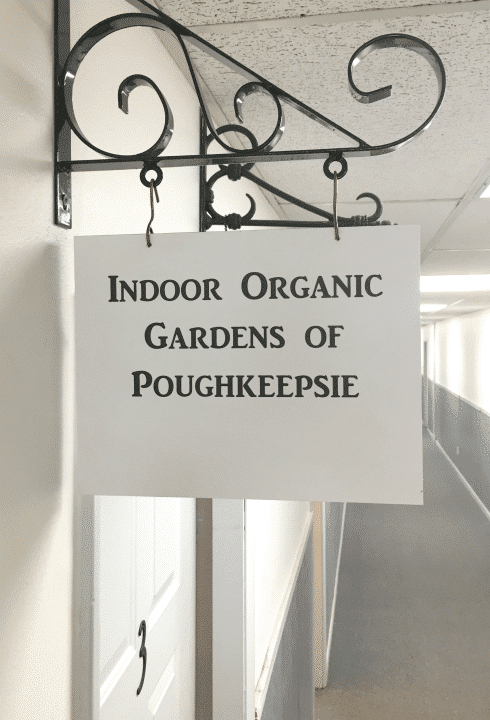
One of the perks of doing what I do, is that sometimes I get to interview some remarkable individuals. This week I had one of those experiences.  I had a very unique opportunity to spend about an hour interviewing one of the pioneers in the indoor organic micro-greens farming industry  from Indoor Organic Gardens of Poughkeepsie named Brud Hodgkins. After over 20 years as a chef who is passionate about childhood education, empowerment and nutrition, it is still awesome to connect with someone who shares that same vision.  As the daughter of a greenhouse manager and Master Gardener, I relish the opportunity to bend the ear of an urban farmer. 

 In full disclosure, Brud's company reached out to me to see if I would be interested in sampling their products for this blog. As a chef who has used micro-greens extensively as an Executive chef in a French bistro as well as catering venue, I already was a huge fan of what they could do for any dish. Add to that, the desire to continue to incorporate micro-greens in my at-home cooking, this seemed like an ideal marriage of product use. They are not paying me to endorse their products. They're just giving me some greens.  So, I will be sharing their stuff here on my blog. Don't let that freak you out. I'm always trying to share good nutrition with y'all. I think this is pretty daggum interesting to hear about.

This is what I found out about this amazing food source and this indoor farm.


Photo Courtesy of IOGP website

Bringing Farming to the Inner City
First of all...Brud explained  that his crop is farmed exclusively indoors using a commercial property that was sitting vacant after the downfall of one of the neighborhood retail marketplaces. In a seventeen thousand square foot facility that originally started out as a K-Mart-type store, they're using this space to produce a powerful nutrition source in the middle of the city. At the first mention of this, my mind actually starting racing, thinking of all the vacant buildings in my own town that could easily be converted to such a use. It was a brilliant use of space, not to mention providing clean food and employment opportunities to the "at risk" segment of society usually found in the parts of the city he is focusing on in Poughkeepsie. In fact, just before our meeting, Brud had been meeting with some local high-functioning autistic teenagers who would be coming to work at his farm. This of course, got us talking about the need for education of children in the school system.

Photo courtesy of IOGP website

Kids Love Them!
Micro-greens are sweet and nutrient dense. They are easy-to-absorb nutrition...and one of the simplest things to get kids to eat. For example, cabbage Micro-greens have 260% more vitamin A than fully grown cabbage, and they don't taste like cabbage. They taste sweet.  That's just one of many examples of the powerful punch of nutrition in micro-greens.  They grow to mature micro-status in just a few days! Why wouldn't we teach kids how to grow these? They want to eat them because there's ownership.  Well...Brud is doing that. They're launching local school STEM programs teaching kids first hand how to grow this crop...and they're giving them the power to be able to grow a crop that is financially sustainable. 

So here's the skinny on Micro-greens. 

*What are microgreens?
 Microgreens are older than sprouts, but younger than baby vegetables. Almost any edible vegetable or herb can be enjoyed as a microgreen, such as lettuce, radish, basil, beets, celery, cabbage and kale. Many microgreens are four-to-six times higher in vitamins and antioxidants than their adult forms and can provide a nutrient boost in just a few calories.


Eating them
Many people enjoy the tiny leaves of microgreens for their fresh taste, crisp crunch and bright colors, including:
  • Raw, as an addition to a salad. Drizzle with a little lemon juice or low-fat dressing or eat them on their own.
  •  As a garnish to meals. Add them to your breakfast plate. Top fish, chicken or baked potatoes with microgreens.
  • Added to a sandwich or wrap.
  •  Sprinkled into soups, stir fries and pasta dishes.
  • Blended into a fruit drink or cocktail.
Growing them
  •  If you grow your own microgreens or purchase them in soil, snip the healthy stems and leaves above the soil when they are seven-to-14 days old. 
  • Eat them fresh, or store them in the refrigerator.
Finding them
  • Microgreens are available at local health food stores or whole foods markets. Look near the lettuce for packages of greens that are a few inches in length and have tiny stems and leaves. Check the local farmers market as well. Microgreen growing kits can be ordered online or found in some kitchen stores. (May I suggest just getting them from here. )
  • Selections may change from time to time so keep an eye out for your favorites.
  • Once cut, they can last in the refrigerator for five-to-seven days, sometimes longer depending on the type.
*Source: here


As for me and Brud Hodgkins, we are clearly on the same page regarding organic plant based nutrition, clean food, providing opportunities for the "at risk" segment of society, environmental Awareness, etc, etc.  They at IOGP are working toward the Financial Sustainability end by spreading the word so folk's know there is a Source of Nutrition Dense Vegetables within 24 hours of Harvest to fill their Personal and/or Commercial needs.  
 The website for info and ordering:  indoororganicgardensofpoughkeepsie.com


Photo courtesy of IOGP facebook page


There you go. Awesome Micro-greens. Great Brand. I'm a fan. 

Always My Very Best,
Your Friend Chef Tess

Tuesday, February 1, 2011

How to Home Grow Alfalfa Sprouts (Tutorial Tuesday)

Welcome to another fun Tuesday here on the blog! It's time for a tutorial that has been requested by many many emails. How to sprout! I want to start with a basic seed that doesn't require any special equipment to grow. Others are a little more labor intense.

Alfalfa Sprouts are remarkable plants that contains an abundance of essential nutrients and are loaded with health benefits. I use them a lot of places but most often on a sandwich between two pieces of homemade bread and some fresh tomatoes when the tomatoes are nice and perky and the alfalfa is nice and lean. I love that. I can't even tell you how much I Love them on a salad. So where do we start? Let's go for the seeds themselves. Where does one get alfalfa seeds, enough to plant an in kitchen garden? Well...first let me tell you about the seeds.
" Did you know that alfalfa is actually a member of the legume family? Making it a bean? Did you know that in less than 7 days you can have fresh sprouts of alfalfa, making it one of the most nutritious and accessible foods in the world?
Alfalfa sprouts juice contains a myriad of valuable nutrients such as calcium, folic acid, magnesium, manganese, molybdenum, phosphorus, potassium, silicon, sodium, zinc.

This is the only plant that supplies the full range of vitamins, from vitamin A, B complex (even B12), C, E to K. Alfalfa sprouts placed in indirect sun for a couple of days before harvesting, even produce nutritious blood-healing chlorophyll." find more about Alfalfa Sprouts (http://www.juicing-for-health.com/alfalfa-sprouts-nutrition.html)


I really love Azure Standard's organic alfalfa seeds. I get the 5 lb bag locally at Preparing Wisely in Mesa, AZ (Preparing Wisely Online Store) and it lasts me about 6 months...even with sprouting weekly.
Here's what I do. First I get a good hair net. Okay. It's not a hair net...it's a nice mesh piece of fabric netting. One with small enough holes that the seeds won't get through. A hair net would be cool if I was really into looking like "I Love Lucy"...ya know? Take the fabric and put it on the open end of a jar. I use a canning quart jar, but any jar will work as long as the fabric is tied securely to the opening with a piece of twine or a canning ring.
I soak 1/4 cup of seeds in a quart of water overnight. They look so sad in the water...but they won't die.
Drain the seeds. Run water through the mesh and rinse the seeds. Drain.
Turn the jar upside down and allow full sunlight for 8 hours, rinse two times a day for the next 3 days keeping in sun for nice green sprouts.
This is a batch I started Saturday night. It's now Monday and they look like this...

Give them a couple more days and they will be all bright green and ready for sandwich making. Once sprouted, I store them in the fridge up to 4 days. They usually are eaten by then.

There you go. Basic alfalfa sprouts. The same method can be used for lentils, mung beans, and so forth. When I was growing up it wasn't unusual to sprout staple amounts of radish seeds for a peppery addition to our sandwiches. More to follow as we explore more of the culinary world. But...in the meantime, try to sprout some alfalfa.