I taught a class yesterday on the basics of gluten free baking at Honeyville Grain in Chandler, Arizona. I'm still scratching the surface and learning so much. I always feel that way. I've said for years, "The more I learn, the more I realize how little I know." It keeps my mind ever focused on being a perpetual student. That being said, I wanted to share with you what we learned together at the class. I realize some of you are on the other side of the country and the world. I am also including printable notes for those who want to try the recipes. The response I got on the bread, "Wow! This cannot be gluten free! It tastes too good!" I take that to my heart and hold it there. I think you will be very happy with these recipes. Here are the basic notes:
Gotta' Be Gluten-Free!
Gluten-Free baking 101 Class with Chef Stephanie Petersen
What is Celiac Disease?
“Celiac disease, also known as gluten intolerance, is a genetic disorder that affects at least 1 in 133 Americans. Symptoms of celiac disease can range from the classic features, such as diarrhea, weight loss, and malnutrition, to latent symptoms such as isolated nutrient deficiencies but no gastrointestinal symptoms. The disease mostly affects people of European (especially Northern European) descent, but recent studies show that it also affects Hispanic, Black and Asian populations as well. Those affected suffer damage to the villi (shortening and villous flattening) in the lamina propria and crypt regions of their intestines when they eat specific food-grain antigens (toxic amino acid sequences) that are found in wheat, rye, and barley. “ www.celiac.com
I'm Chef Stephanie Petersen. I have many friends, family and clients who cannot have gluten in their diets. It's a very frustrating transition, not just for those who have to make this transition, but for families and friends trying to support someone in this change-over. However, it is a totally necessary lifestyle change if you suffer from gluten intolerance . If you're in our class today, you are going to be able to “take back” a few things you may feel like you or someone you love had to give up because of a gluten-free diet. I hope I can offer some advice and information that you will find useful in your journey. I focus on whole foods and whole grains. Generally there tends to be a tendency to lean on simple starches in a gluten-Free diet. These starches, though useful, can cause spikes in blood sugar levels. They are low in fiber and protein. They don't provide any nutrient-dense food value. I hope to increase your awareness of these grains and help you add these flavorful little grain-darlings into your diet. They are amazing for what they can offer you not only in booting health, but taste!
Today we'll be covering
Gluten free grains
Grains with gluten
Substituting gluten in baking (gums)
Gluten free Starches
Gluten Free Flour and Blending
Tips and Techniques of Baking with Gluten-Free Blends
Recipes and Ideas
Gluten Free Grains, Grasses and Seeds
Amaranth, Buckwheat, Corn, Millet, *Oats, Wild rice, Rice, Sorghum, Teff, Quinoa, Flax seed, chia seed, sesame seed, and sunflower seed (* Oats can be found gluten-Free but must be certified to be so. Check the labels carefully.)
Grains with Gluten
Wheat including all varieties like spelt, Kamut, farro, and duram and products like bulgar and semolina. Barley, Rye, Triticale and Oat* ( *unless certified gluten free)
gluten free baking gluten free gluten free gluten free gluten free gluten free gluten free
Note: You can see pictures of many of these seeds on my post "grain identification"
gluten free baking gluten free baking gluten free baking gluten free baking gluten free baking
Substitute Gluten in Baking
Gluten, a protein found in wheat flour, is what gives structure to baked goods. It gives breads, muffins, and cakes their soft spongy texture. To replace gluten, you'll need to use other thickeners like xanthan gum or guar gum in your baking. For each cup of gluten-free flour mix, add at least 1 teaspoon of gluten substitute. I tend to increase the egg content as well. If you are a vegan we'll discuss the flax seed replacement, but it will not totally give you the volume you would have with egg.
Xanthan Gum
This comes from the dried cell coat of a microorganism called Zanthomonas campestris. Available in the Honeyville gluten-free section in 2 oz bottles.
Guar Gum
This powder comes from the seed of the plant Cyamopsis tetragonolobus. It is an excellent gluten substitute and it is available in health food stores and some supermarkets. Honeyville carries it in large quantity online here. Though, I must warn you it's a 50lb bag. Those gluten free for a lifetime can use that much right?
Gluten-Free Starches and their uses
Potato Starch This is a gluten-free thickening agent that is a nice thickener in soups and sauces. Mix it with a little water first, then substitute potato starch flour as you would cornstarch in a recipe. Half as much flour as called for to thicken.
Tapioca Starch/Flour This is a light, white, very smooth flour that comes from the cassava root. It gives baked goods a nice chewy texture. Try it in white bread or French bread recipes. It is also easily combined with cornstarch and soy flour.
A refined starch that comes from corn, it's mostly used as a thickening for puddings, fruit sauces, and Asian cooking. It is also used in combination with other flours for baking.
Cornmeal Cornmeal can be ground from either yellow or white corn. This is often combined with flours for baking. It imparts a strong corn flavor that is delicious in pancakes, waffles, or muffins.
Gluten-Free Whole Grain Flour Blends
Almond Flour Honeyville Has certified gluten-free almond flour. Full of protein and dietary fiber, almond flour works well in a wide variety of recipes. Blanched Almond Flour can be substituted for flour in cakes, breads, cookies, muffins, and your favorite recipes that call for flour. Use it as a thickener in soups and puddings too! The taste and texture is phenomenal. With a fraction of the carbs of wheat flour, almond flour provides a hearty flavor and consistency without adding all of those empty calories. Honeyville’s Blanched Almond Flour is 100% pure skinless almonds, with no additional ingredients added. The almonds are not subjected to any chemical or steam treatments. Blanched Almond Flour is simply skinless almonds that are milled into fine flour. The only process that occurs, other than milling, is a hot water bath to remove the skins from the almonds. Honeyville Blanched Almond Flour is an ideal product for your gluten-free and low-carb baking needs. For almond flour with the skin, try Honeyville Natural Almond Flour.
 |
| Whole grain Amaranth |
Amaranth. Seeds whole cook on the stove top simmer 1:3 low simmer 25 minutes (pressure cook 3 minutes)It's one of the smallest grains out there (technically a grass seed). It was one of the staple grains of the Incas and it is known as kiwicha in the Andes today. It's a prolific growing plant. It is heralded as a super grain, meaning it has all the amino acids your body needs. In a 1977 article in Science it was called “the crop of the future.” Amaranth contains about 30% more protein than most common cereals like rice, wheat,oats and rye! Pop it and you're addicted...like crack..but healthy. It's better for you than popcorn too! See, I say popping amaranth and it sounds like a new drug huh? Amaranth is Gluten free. It's great cooked (stove top 1:3 simmer low 25minutes) and makes a nice addition to breads, cakes and cookies when popped. How do you pop it? Put ¼ cup of amaranth in hot deep pan and stir until it pops until it quadruples in size. It will make about 1 cup. Use this in homemade oatmeal cookies or granola bars for an amazing crunch. Or...I use it in a chocolate Amaranth bread that is absolutely outstanding. Oh and ladies and gents as a side note...Besides protein, amaranth grain provides a good source of dietary fiber, and minerals such as iron, magnesium, phosphorus, copper and especially manganese. It has been claimed to be beneficial in preventing the graying of hair too. I'm not sure about that...but I know it's great in bread. Amaranth flour may have a bitter aftertaste so it should be used sparingly (½ to ¾ cup per recipe). This flour works best in recipes with brown sugar or maple syrup to balance its taste. (¼ cup yields 3 grams fiber and 4 grams protein.)
 |
| Whole Grain Brown Rice |
 |
| Whole grain buckwheat |
Buckwheat Whole grain buckwheat can cook on the stove top 1:3 low simmer 32 minutes (pressure cook 4 minutes)/
Buckwheat is actually not related to wheat at all and is 100% gluten free. A century ago Russia was by far the world leader in buckwheat. Kasha or buckwheat groat is a well known use of buckwheat for pilaf. With a strong flavor, rich in iron and a high concentration of all of the amino acids. Amazing in pancakes and great for a nice dense bread. It can be strong in flavor so get the hulled varieties. For breads and rolls, use up to 1 cup per recipe to impart a taste and texture that comes close to whole wheat. Use less when baking delicate cookies or pies. (¼ cup contains 6 grams fiber and 5 grams protein.)
White Corn Flour. This flour is called a neutral flour. It is milled from corn but is not cornstarch or corn meal. It can be blended with cornmeal to make cornbread or muffins. It is excellent for waffles or pancakes.
 |
| Whole Flax Seed |
Brown Flax Seed Meal is high in fiber and omega-3 fatty acids. Whole flax seed is not digestible so buy flaxseed meal (ground flaxseed) or make your own by grinding the seeds in a clean coffee grinder. Use 2 to 3 tablespoons of flaxseed meal per recipe for baked goods or sprinkle it on yogurt or cereal for a nutritional boost. Store in the refrigerator or freezer. Flax seed meal can be soaked in warm liquid and used to replace egg in many recipes. One tablespoon flaxseed meal soaked in 3 tablespoons warm liquid is equal to one egg. (2 tablespoons yields 4 grams fiber and 3 grams protein.)
Garbanzo Bean ( AKA the chickpea) The flour is high in protein, calcium and fiber. Other bean flours additions are wonderful in gluten-free baking. Varieties available as flour include bean (navy, pinto and red) and soy. Garfava flour is a blend of flours made from garbanzo, fava and Romano beans. Unfortunately certain bean flours, particularly garfava and chickpea, have an aftertaste that many find unpleasant, these should be used in relatively small amounts, less than 20 percent of your recipe’s total flour blend.
 |
| Whole Millet |
Millet . Whole grain use 1:3 simmer 35 minutes or pressure cook 6 minutes most often used in America as a bird seed filler yet remarkably well loved all over the world as actual food. Teff and Millet are in the same “subfamily”...meaning they are both very drought resistant and easy to grow. This is the most widely cultivated species in terms of worldwide production. The cultivation of millet was of greater prevalence in prehistory than rice especially in northern China and Korea. It was millet, rather than rice that formed important parts of the prehistoric diets in Indian, Chinese and Korean societies. Evidence dating back to 8300 BC and the use of millet can be found. Millet is Gluten Free. Millet flour has a mild sweet nut-like flavor. The high protein flour is also high in fiber. For optimum results don't use more than 25/5 millet flour in an flour blend. (¼ cup yields 4 grams fiber and 3 grams protein.)
 |
| Whole Black Qinoa it also comes in Red and White |
Quinoa To cook seeds stove-top use 1:2 simmer 20minutes stove top pressure cooker 6 minutes. Pronounced Keen-wah originated in the Andean region of South America where it was successfully domesticated about 4000 years ago.. I once heard this called the great “lost grain of ancient America.” Unknowing that there was a natural occurring coating containing bitter tasting saponins I made the grain without rinsing it...only once. Because it is cooked in the same way as rice I thought that the rinse was optional. I learned very quickly that the rise was not an optional stage for the bulk quinoa. Some you can purchase in small boxes and it says “rinsed”. If it does then by all means don't rinse. Quinoa comes in Black, Red and White varieties. It can be used any way you use rice and more! It's gluten free and loaded with fiber. It's a complete protein! flour, milled from a grain that’s native to the Andes mountains in South America, has high levels of calcium, protein, complex carbohydrates, phosphorous, iron, fiber and B vitamins. This flour is easy to digest and has a delicate, nutty flavor similar to wild rice. Mix it with other flours to increase the nutritional value of your recipes but avoid using it in large quantities (no more than 25 to 30 percent of the total flour blend), as it can overpower the flavor of your baked goods. (¼ cup yields 4 grams fiber and 4 grams protein.)
 |
| Whole Grain Sorghum |
Sorghum flour available in white and red varieties with a slightly sweet taste. It is high in protein, fiber, potassium and B vitamins. It works best when blended with other flours. Only use 30% in any flour blend. It is a darker colored flour so don't use it where you want a white appearance in the finished products. Use sorghum flour as an important part of high protein blends. (¼ cup yields 3 grams fiber and 4 grams protein.)
Soy Flour A nutty-tasting flour with high fat and protein content. It's perfect when used with a combination of other flours and in brownies. Use it with fruits and nuts to help mask the beany-flavor.
 |
| Whole Grain Teff seed |
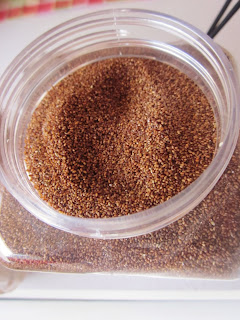
Teff is a grain (grass seed) that comes to us from Ethiopia. Whole seed cook on the Stove top 1:4 simmered 15 minutes (or pressure cooker 2 minutes) It is believed to have originated there around 4000BC. In 1996 the National Research Council characterized Teff as having the "potential to improve nutrition, boost food security, foster rural development, and support sustainable land care". In Africa it's been reported to have over 2000 varieties. It's extremely drought resistant and it's been known to go from a completely dead plant to a living one in a matter of hours. I think I may need to try to grow some and test this theory. So far I've used two varieties...this red variety and the white variety. Most often I use it in cookies, cakes, tortillas and flat breads. It is gluten free...and it contains 8 essential amino acids. It also takes 150 grains of Teff to equal on grain of wheat...so it's smaller than heck! Heck is small...So they're small...yet they pack a nutritional punch! Lots of fiber as you can well imagine. 2 grams per ounce of grain (That's almost 10% of your daily needs in one ounce baby!). Plus...there's a high amount of quality protein and a good source of iron, magnesium, phosphorus and copper.
White Rice Flour This is an excellent basic flour for gluten-free baking. It is milled from polished white rice. Because it has such a bland flavor, it is perfect for baking, as it doesn't impart any flavors. It works well with other flours.
Use a combination of flours. Usually not one single flour will do the trick for avoiding dense heavy results. Generally plan on no more than 30 % of each flour. Usually this means no more than 1 ½ cup of each flour for every 5 cups of blended flour. The exception: chickpea and millet. They have a strong flavor and will overpower the flavor of baked goods. For these you can use a lot less, about ¾ cup for every 4 to 5 cups of flour blend.
A good formula for healthy all purpose flour: 1½ cups nutrient- dense flour (amaranth, buckwheat, chickpea, millet, quinoa, sorghum)1 cup neutral flour (white/ brown rice flour, corn flour)1 cup starch (tapioca,corn, potato) ½ cup alternate starch
Store high-protein flours in airtight containers with a wide mouth so you can measure over the container.
Refrigerate all gluten-free flours. Allow refrigerated flours to return to room temperature before you use them, unless the recipe states otherwise. Use a wire whisk to get rid of flour clumps before you measure.
High-Protein Flour Blend (MAKES 7 ½ cups)
Blend well. Place in tightly sealed container and refrigerate. Each ¼ cup contains 121 calories, 1g total fat, 0g saturated fat, 0g trans fat, 0mg cholesterol, 234mg sodium, 27g carbohydrate, 2g fiber, 2g protein. Note that most power flours are interchangeable in equal amounts (not flax seed meal, chickpea or millet flour). Neutral flours are interchangeable in equal amounts. Flours are not interchangeable with starches, as they have different baking properties.
Chef Stephanie Petersen’s Gluten Free Fresh Milled multi-grain flour
24 oz sorghum
12 oz buckwheat
12 oz brown rice
12 oz amaranth
12 oz quinoa (pre-rinsed variety is best and will not impart a bitter flavor to flours)
Measure by weight. Mix the grain together. Mill on finest setting. If you are not generally gluten free and are milling flour for someone who is, you may need to find out how sensitive they are to gluten. Generally try to have one mill that is 100% gluten free. This will keep the flour from being contaminated. For those highly sensitive to gluten, this is very important.
Chef Tess Super-Grain flour recipes (above) use 5 cups of Chef Tess multi grain flour, 2 cups tapioca starch, 1 cup of corn starch, 2T xanthum gum and 1T seas salt.
1/3 cup egg whites
1 egg
1 tablespoon apple cider vinegar
1/4 cup olive oil
1/4 cup honey or agave nectar
1 1/2 cups warm skim milk (or soy milk)
1 teaspoon salt
1 tablespoon xanthan gum
1 cup tapioca flour
2 cup whole grain sorghum flour (or Chef Tess Multi-Grain GF blend)
1 ½ cup brown rice flour
1T active dry yeast
Directions: Combine egg, egg whites, vinegar, olive oil, honey and milk in a bowl. In a gallon size mixer bowl combine salt, xanthan gum, tapioca flour, sorghum flour, and brown rice flour. Add the yeast to the wet ingredients. Combine wet and dry ingredients and knead by hand 3-4 minutes. Form into a rough ball. Allow to sit 5-10 minutes. Sprinkle counter top with ¼ cup extra sorghum flour. Put dough on counter and gently form into a loaf. Lightly grease an 8 inch by 4 inch bread pan. Leave uncovered on the counter 45 minutes. Preheat oven to 350 degrees. Bake 350 degrees 60-65 minutes until 170 degrees internal temperature. When bread is finished, let cool 10-15 minutes before removing from pan. Slice with a very sharp bread knife after bread has cooled. Wrap tightly after bread cools to reserve moisture.
Cookies
Chef Tess Gluten Free Brown Rice Classic Chocolate Chip Butterscotch Cookies
350g Honeyville Brown Rice Flour (2 ½ cups or 625 ml)
3g Xanthan Gum (1tsp or 5ml)
7g Salt (1 tsp or 5mg)
3g baking powder (1 tsp or 5ml)
113g(4 oz) melted butter (½ cup or 125 ml)
275g Dark brown sugar (1 ½ cup or 375 ml)
110g whole egg (2 eggs or 125ml)
7g pure bourbon vanilla (1 tsp or 5 ml)
340 g dark chocolate chips or chunks (make sure they're labeled gluten-free) (2 cups or 500ml)
Preheat oven to 375 degrees. In a large bowl combine the brown rice flour, xanathan gum, salt, and baking powder. In a separate bowl whisk the melted butter, dark brown sugar, eggs and vanilla. Mix the brown rice flour mixture with the egg/sugar mixture. Stir well. Add the chocolate chips. Scoop cookies (36g each or 2T/30ml) onto a lightly oiled cookie sheet with 1 inch between cookies. Lightly flatten cookies with your hand. Bake 9-10 minutes. Remove from oven and allow to cool on cookie sheet 5 minutes before transferring to a cooling rack. Keep in an air tight container. Yield 2 dozen cookies.
Chef Tess GF Almond Flour Sugar-free Cookies
2 cups Honeyville Almond flour (certified gluten free)
1 cup Splenda spoonable or alternative (1 cup sugar will work)
1 egg
1/2 tsp. Vanilla
1/4 tsp. Baking Soda
Directions: Mix together all ingredients. Scoop by rounded Tablespoon onto an a parchment lined baking sheet. Dough will be thick. Slightly smash cookies to 1/2 inch thickness. Bake 12-15 minutes at 350 degrees.
Chef Tess’ All Natural Gluten Free Pancake Mix
4 cups Chef Stephanie Petersen’s gluten free multi-grain flour*
1/2 cup organic extra virgin coconut oil (chilled for about 20 minutes until solid), 1/3 cup fructose granules, xylitol, or 4 packets stevia
2T baking powder,1 tsp salt,1T xanthan gum
Combine well, until oil is smaller than the size of a pea. Yield 4 1/2 cups (2 mixes)
To prepare for pancakes:
2 1/4 cups mix, dash of cinnamon or nutmeg, 1/2 tsp vanilla, 2 eggs, 3 cup water or soy milk
Add eggs and water. Mix until well combined. Cook on a hot griddle.
Get the printable class notes and recipes Here.
There you go! Hopefully this helps you in your journey. Bake some gluten free happiness.
Always My Very Best,
Your Friend Chef Tess


.jpg)


.jpg)


